Reading time: 4 MINUTES
In modern kitchen design, the choice between freestanding and integrated appliances is rarely all or nothing. Many kitchens already use a combination of both, with built-in ovens, cooktops, and rangehoods designed into cabinetry, while appliances such as refrigerators and microwaves are more often freestanding for flexibility.
This article looks at how freestanding and integrated appliances differ across key kitchen categories, and how each approach shapes layout, space planning, and the overall feel of the kitchen. It also highlights what’s worth considering when deciding which option suits your space and the way it’s used.
What are integrated and freestanding kitchen appliances?
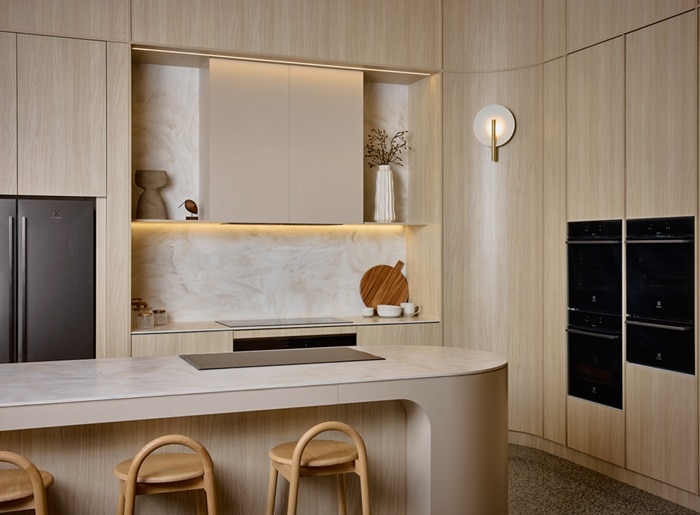
Integrated kitchen appliances are designed to sit neatly within cabinetry, becoming part of the kitchen rather than standing apart from it. Appliances such as ovens, rangehoods, cooktops, microwaves, and dishwashers are typically installed flush with surrounding surfaces, helping create a clean, streamlined look that aligns closely with the overall kitchen design.
Freestanding appliances, by contrast, are finished on all sides and designed to stand on their own. They can be placed more freely within the kitchen and are generally easier to move or replace. Common examples include freestanding cookers, refrigerators, and microwaves, making them a familiar and flexible option in many kitchens.
Understanding the differences between freestanding and integrated appliances
Choosing between freestanding and integrated kitchen appliances affects layout planning, installation requirements, and how appliances sit within the space over time. The table below provides a high-level comparison of the two approaches, followed by a closer look at how these differences play out in practice.
Here's a quick side-by-side comparison to help you weigh the differences at a glance, followed by a deeper look at the pros and cons of each, when you keep reading below.
| Integrated appliances | Freestanding appliances |
|---|---|
| Feature | |
| Planned and fitted within cabinetry as part of the kitchen layout | Stand-alone units designed to be positioned independently |
| Visual presence | |
| Sit flush with cabinetry for a streamlined, cohesive appearance | Remain visually distinct within the kitchen |
| Kitchen integration | |
| Seamlessly fits into kitchen’s cabinetry and layout | Stands independently with no structural integration |
| Mobility and relocation | |
| Installed permanently and is not meant to be moved | Can be moved or replaced with minimal effort |
| Access and servicing | |
| May require more planning for access due to fitted installation | Generally easier to access due to exposed sides |
Installation and placement
Integrated appliances are designed to be installed as part of the cabinetry and overall kitchen layout. This requires accurate planning to ensure appliances align correctly with surrounding surfaces and ventilation requirements.
Freestanding appliances are designed to stand on their own and can be positioned more independently. This can make them easier to introduce into existing kitchens or adjust over time.
Visual integration
One of the key differences between the two approaches is how appliances appear within the kitchen. Integrated appliances are designed to sit neatly within cabinetry, supporting a clean and cohesive look.
Freestanding appliances remain visible elements in the space. While many designs are visually refined, they tend to stand apart from surrounding cabinetry rather than blending into it.
Space and layout planning
Integrated appliances are often planned to make efficient use of space, particularly in kitchens where visual clarity and alignment are priorities. By reducing visual breaks, they can help kitchens feel more ordered and cohesive.
Freestanding appliances offer more flexibility in placement and can be easier to adapt if the kitchen layout changes over time.
Features and performance
Both integrated and freestanding appliances are available with a wide range of features, from basic functionality to more advanced cooking and cleaning options. Performance depends on the specific model rather than whether an appliance is integrated or freestanding.
Choosing between the two formats is often less about capability and more about how the appliance fits within the overall kitchen plan.
Access and upkeep
Freestanding appliances are generally easier to access for cleaning or servicing due to their exposed sides and flexible placement.
Integrated appliances may require more consideration when it comes to access, as they are fitted within cabinetry. However, their flush installation can also reduce areas where dust and debris collect around the appliance.
Pros and cons of integrated and freestanding kitchen appliances
-
Integrated Kitchen Appliances
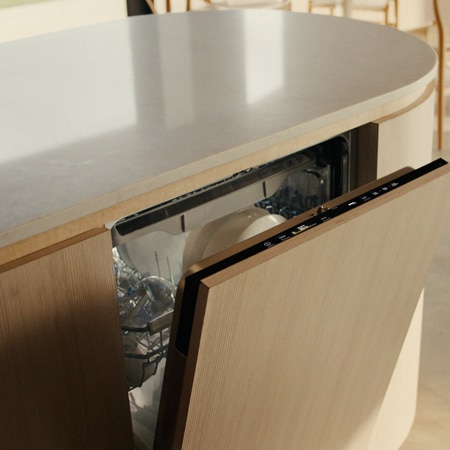
Integrated kitchen appliances are designed to sit within cabinetry, creating a cohesive kitchen layout. While this approach supports certain design and planning goals, it also comes with considerations that are worth understanding before committing.The advantages of integrated kitchen appliances Points to consider with integrated kitchen appliances Cohesive appearance
Integrated appliances sit flush with surrounding cabinetry, helping create a more visually aligned and orderly kitchen.Requires early planning
Integrated appliances need to be considered alongside cabinetry and layout, rather than added later.Supports efficient space planning
By aligning appliances with cabinetry and surfaces, integrated designs can reduce visual interruptions and support more compact layouts.Less flexibility after installation
Once installed, appliances are generally fixed in place and less adaptable to layout changes.Considered placement
Appliances can be positioned to suit workflow and comfort, such as wall-mounted ovens or dishwashers placed to reduce bending.Access considerations
Servicing or replacement may require more planning, as appliances are fitted within cabinetry.Wide range of features
Integrated appliances are available with a broad selection of cooking, cleaning, and control features, depending on the model.Dimension-specific
Replacement appliances need to match existing dimensions and installation requirements. -
Freestanding Kitchen Appliances
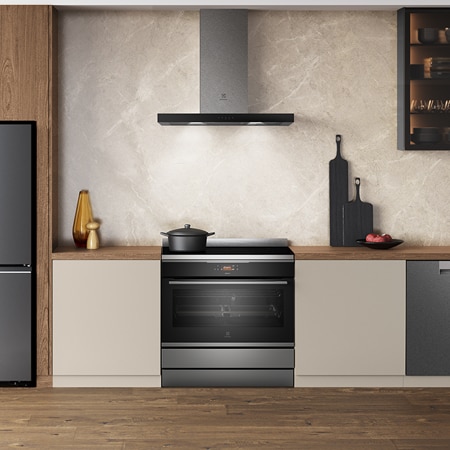
Freestanding kitchen appliances are designed to stand independently within the kitchen. They remain a common choice due to their flexibility and ease of placement, though they interact with the kitchen layout in different ways compared to integrated options.The advantages of freestanding kitchen appliances Points to consider with freestanding kitchen appliances Flexible placement
Freestanding appliances can be positioned more freely within the kitchen and adjusted over time if needed.More visual presence
Freestanding appliances remain distinct elements within the kitchen, which can interrupt visual continuity.Simple integration into existing kitchens
They can often be introduced without changes to cabinetry or surrounding structures.Space allowances
They may require additional clearance around the appliance, which can affect layout efficiency.Broad availability
Freestanding appliances are available in a wide range of sizes, finishes, and configurations.Less alignment with cabinetry
Freestanding designs do not sit flush with surrounding units, which may affect the overall sense of cohesion.Easy access
With exposed sides and backs, freestanding appliances are generally easier to access for cleaning or servicing.Layout-driven limitations
Their positioning is often influenced by available space rather than being fully integrated into the kitchen plan.
How to choose between integrated and freestanding kitchen appliances
Choosing between integrated and freestanding appliances is less about individual features and more about how your kitchen is planned and how the space will be used over time. Considering these points can help clarify which approach is more suitable.
- Think about how the kitchen functions day to day: Consider how you move through the space when cooking, cleaning, and preparing meals. Integrated appliances can support a calmer, more visually aligned environment, while freestanding appliances allow for easier adjustment if the kitchen needs to adapt.
- Plan for change over time: If flexibility is important, freestanding appliances are easier to replace or reposition. Integrated appliances are better suited to kitchens where the layout is planned with longer-term use in mind.
- Consider the role of design in the space: Integrated appliances are designed to sit within cabinetry, supporting a cohesive look across the kitchen. Freestanding appliances remain visible elements and can act as individual focal points within the room.
- Balance practicality with planning: Both options are available with a wide range of features and performance levels. The key difference lies in how they are incorporated into the kitchen layout rather than what they can do individually.
Integrated or freestanding? Here’s how to decide on each appliance
Different appliance types interact with the kitchen layout in different ways. Looking at integrated and freestanding options by category can help clarify where each approach makes the most sense.
Cooktops and hobs
| Integrated cooktops | Freestanding ovens with cooktop |
|---|---|
| Designed to sit flush within the benchtop, integrated cooktops support a clean, uninterrupted work surface. They suit kitchens where visual alignment and surface continuity are priorities. |
These combine the oven and cooktop in a single unit, making them a practical option for certain layouts. Because they are self-contained, they can be easier to position in kitchens that are not designed for fully integrated solutions. |
Ovens
| Integrated Ovens | Freestanding Ovens |
|---|---|
| Often installed at bench or eye level, integrated ovens allow for more considered placement within the kitchen layout. This approach can support workflow and reduce the need for bending. |
Freestanding ovens combine the oven and cooktop into a single unit. They can be practical where space or layout limits separate installations. |
Dishwashers
| Integrated dishwashers | Freestanding dishwashers |
|---|---|
| Designed to sit behind cabinetry panels, integrated dishwashers blend into the kitchen visually and reduce visual breaks along cabinetry runs. |
Freestanding models remain visible within the kitchen but offer flexibility in placement and easier replacement. |
Rangehoods
| Integrated rangehoods | Freestanding or canopy hoods |
|---|---|
| Integrated hoods are built into cabinetry or ceilings, keeping extraction discreet while maintaining a clean visual line. |
These remain visible design elements and can act as focal points within the kitchen, depending on style and placement |
Choosing what works for your kitchen
There is no single right choice when comparing integrated and freestanding appliances. The decision depends on how the kitchen is planned, how permanent the layout is intended to be, and how much visual integration is desired.
Integrated appliances suit kitchens where layout, cabinetry, and appliances are planned together. Freestanding appliances offer greater flexibility and adaptability over time. Understanding how each approach fits within the space can help guide a more confident decision.
Frequently asked questions on choosing integrated kitchen appliances
-
Which option is better for small kitchens: integrated or freestanding appliances?
Integrated appliances are often the better choice for small kitchens because they save space and create a more streamlined layout. Their integration with cabinetry also helps reduce visual clutter, making compact kitchens feel larger.
-
How do integrated appliances work?
Built-in appliances operate just like freestanding ones, but they’re designed to fit flush into cabinets or walls. They connect to standard plumbing or electrical systems, but often require more precise installation to ensure ventilation, safety, and a clean fit.
