Reading time: 5 MINUTES
Learn when to use each steam level to bring out better flavour, texture, and consistency in every dish.
Using steam in cooking opens up new possibilities for better texture, flavour, and consistency. But knowing how much steam to use, and when, makes all the difference. Different steam levels are designed for different types of dishes and cooking results. By understanding when to use low steam, high steam, or full steam, you can choose the right setting and bring out the best in every dish, every time.
What is steam cooking?
Steam cooking uses a combination of heat and controlled moisture by introducing steam into the oven cavity during cooking to create a more balanced cooking environment inside the oven. Instead of relying on dry heat alone, steam is introduced to surround the food, helping it cook more gently and evenly.
Unlike traditional dry heat, this balance of heat and moisture gives you greater control over the final result. Proteins stay tender, baked goods rise more evenly, and dishes are less likely to lose their natural character during cooking.
It’s a simple way to achieve more precise, reliable results without overcomplicating the way you cook.
How does steam cooking work?
Steam cooking in Electrolux ovens is powered by a patented Direct Steam system that works by introducing controlled bursts of moisture into the oven while heat is applied. As the temperature rises, water turns into steam and circulates around the food, transferring heat more efficiently than dry air alone.
This process helps food cook evenly from edge to centre while reducing moisture loss. At the same time, the presence of steam supports better surface development, allowing baked goods to rise properly and roasted dishes to achieve the desired texture without drying out.
Different steam levels create different cooking results, from crisp golden bakes to tender roasted meats and gently steamed dishes. To explore the role of heat, steam, and airflow in more detail, read our guide to the science of steam cooking.
What can you cook with steam?
Steam cooking is versatile enough to support a wide range of dishes, from everyday meals to more delicate recipes. It can be used to prepare proteins like meat, poultry, and fish, helping them stay tender and juicy, while also working equally well for vegetables, grains, and baked dishes.
Steam cooking works particularly well for:
- Meat and poultry – for tender, juicy results with succulence you can taste
- Fish and seafood – for gentle, even cooking without drying out
- Vegetables – to retain texture, colour, and natural flavour
- Bread and pastries – for improved rise and a well-developed crust
- Cakes and desserts – for soft, moist textures
- Grains and side dishes – such as rice, pasta, and baked sides
This versatility is what makes steam cooking so effective, but achieving the right result depends on how you use it.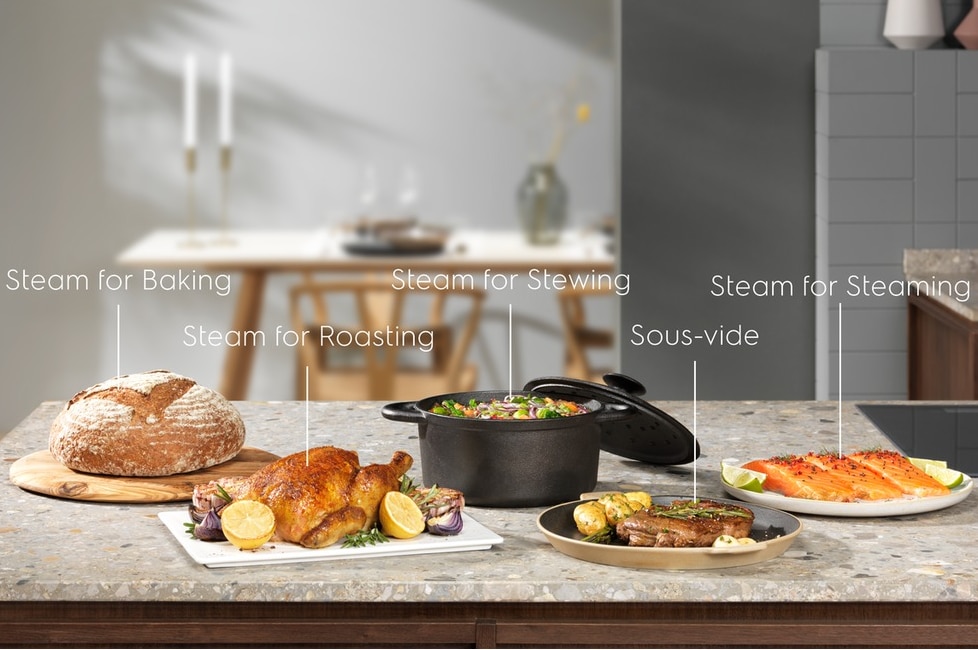
Understanding Different Steam Levels
Different steam levels are designed to support different cooking styles by adjusting how steam and heat work together. Choosing the right steam level depends on the type of dish you’re preparing and the result you want to achieve.
Low Steam
Low steam combines gentle steam and roasting heat to lock in moisture while creating a crisp, golden finish. Ideal for roasting and baking, it helps deliver tender, juicy results with more even cooking.
- Roasted meats and poultry – for juicy interiors with a browned, flavourful finish
- Larger cuts of meat – to reduce shrinkage and retain natural juices
- Bread and pastries – for improved rise and a crisp, golden crust
- Cakes and desserts – for soft, fluffy textures with even baking
- Hearty vegetables – for a tender centre with light caramelisation
- One-pan or tray bakes – where even cooking and moisture balance matter
Low steam is especially effective for breads, cakes, pastries, and roasted dishes because the added moisture creates a better cooking environment inside the oven.
While standard fan cooking can dry out baked goods and roasts, low steam helps food retain moisture while still developing colour, texture, and caramelisation on the outside.
High Steam
High steam uses more moisture during cooking, making it ideal for gentler cooking methods where tenderness and moisture retention are important.
- Fish and seafood – for delicate, even cooking without drying out
- Stews and casseroles – for tender, slow-cooked results
- Chicken and lean proteins – to help reduce drying out
- Reheating leftovers – to help food retain moisture and texture
By introducing a higher level of steam into the oven, food cooks evenly while retaining more of its natural moisture and flavour. High steam is particularly useful for dishes that can easily dry out with conventional cooking methods, helping create tender textures without overcooking.
The result is evenly cooked food that stays moist, delicate, and full of flavour.
Full Steam
Full steam uses 100% steam for gentle cooking without dry heat. This method is ideal for foods that benefit from maximum moisture retention and delicate cooking conditions.
- Vegetables – to help retain colour and texture
- Fish and dumplings – for gentle steaming
- Rice and grains – for even cooking
- Healthy everyday meals – where moisture and natural flavour are important
Since the food is cooked entirely with steam, full steam helps preserve natural moisture, colour, texture, and flavour while supporting gentle, even cooking. It’s a great option for healthier everyday meals and ingredients that benefit from delicate handling.
Tips for better results with steam cooking
Getting the most out of steam cooking comes down to a few simple adjustments. With the right approach, you can achieve more consistent texture, better flavour, and improved overall results.
1. Preheat when using baking with low steam: Preheating helps create the ideal cooking environment for breads, pastries, and cakes, allowing doughs and batters to rise properly before the surface sets. This helps create lighter textures, better volume, and crisp golden crusts.
2. Use the right steam level for the dish: Different steam levels are designed for different cooking results. Low steam works well for roasting and baking, high steam is ideal for gentler cooking methods like fish and casseroles, while full steam suits delicate steaming and healthier everyday meals.
3. Use steam to balance moisture and texture: Steam helps food retain moisture during cooking while still allowing surfaces to brown and develop texture. This helps roasted meats stay juicy, baked goods remain soft inside, and vegetables retain their natural texture and flavour.
4. Avoid blocking steam circulation: Steam needs space to move around the oven cavity. Leaving gaps between trays and dishes allows heat and moisture to circulate evenly for more consistent cooking results.
5. Expect less shrinkage when roasting: Cooking with steam helps meats retain more of their natural juices compared to traditional dry heat cooking, resulting in tender textures and less moisture loss.
6. Adjust expectations for texture: Steam changes the way food cooks and develops on the surface. Foods often cook more evenly throughout while still achieving crisp crusts, caramelisation, or golden finishes.
7. Cook to internal temperature for precision: Since steam affects cooking speed and moisture retention, internal temperature is a more reliable indicator than time. With compatible Electrolux ovens, a Food Probe helps you monitor this accurately.
Discover all the possibilities with Electrolux steam ovens
With Electrolux steam ovens, cooking becomes more adaptable to what you want to achieve. By combining heat, steam, and precise airflow, you can tailor each dish—from roasting and baking to everyday meals.
From using low steam for beautifully risen breads and juicy roasts, high steam for gentle cooking, or full steam for delicate steaming, Electrolux steam ovens give you the flexibility to create a wide range of textures and finishes while bringing out the best in every ingredient.
Explore the possibilities with Electrolux and redefine what you can do in your kitchen.
Frequently asked questions when choosing integrated kitchen appliances
-
What is the difference between low steam, high steam, and full steam?
Low steam combines gentle steam with roasting and baking heat to help retain moisture while still creating crisp, golden finishes. It’s ideal for breads, pastries, roasted meats, and baked dishes. High steam uses more moisture for gentler cooking methods like fish, casseroles, and reheating, while full steam uses 100% steam for delicate steaming, vegetables, grains, and healthier everyday meals.
-
Do I need to preheat the oven when using steam functions?
Preheating is recommended when baking with low steam, as it helps create the right environment for doughs and batters to rise properly and develop structure. For roasting and larger dishes, steam cooking can often be started from a cold oven.
-
Does steam cooking make food soggy?
No. Steam is used in controlled amounts alongside heat, helping food retain moisture while still achieving the desired texture, such as crisp crusts, caramelisation, or golden finishes.
-
What types of dishes are best suited for steam cooking?
Steam cooking is versatile and can be used for a wide range of dishes, including meats, fish, vegetables, bread, pastries, grains, and baked meals. Choosing the right steam level helps achieve the best result for each dish.
-
How does steam help improve cooking results?
Steam introduces moisture during cooking, helping food retain its natural texture and flavour while reducing dryness. This can lead to more even cooking, better rise in baked goods, juicier roasts, and more consistent overall results.
-
When should I use steam for cooking?
Steam is especially useful when you want to retain moisture, improve texture, or cook food more gently. Low steam works well for roasting and baking, high steam suits delicate proteins and casseroles, while full steam is ideal for steaming vegetables, grains, and healthier everyday dishes.
-
Can steam cooking still create a crisp or golden finish?
Yes. When steam is combined with heat and airflow, it can help food stay tender inside while still achieving crisp crusts, browned finishes, and caramelisation on the outside.
-
Why do baked goods benefit from steam?
Steam helps keep the surface of dough soft during the early stages of baking, allowing bread and pastries to rise more effectively before the crust sets. This creates better volume, lighter textures, and crisp golden crusts.
-
Does steam cooking change how I should time my cooking?
Steam can affect how heat transfers during cooking, which may slightly change cooking times. For more precise results, especially with meats, monitoring internal temperature can help ensure the desired doneness.
-
Is steam cooking suitable for everyday use?
Yes. Steam can be used across a wide range of dishes, from simple weekday meals to more advanced cooking, helping deliver more consistent, flavourful results with less guesswork.
